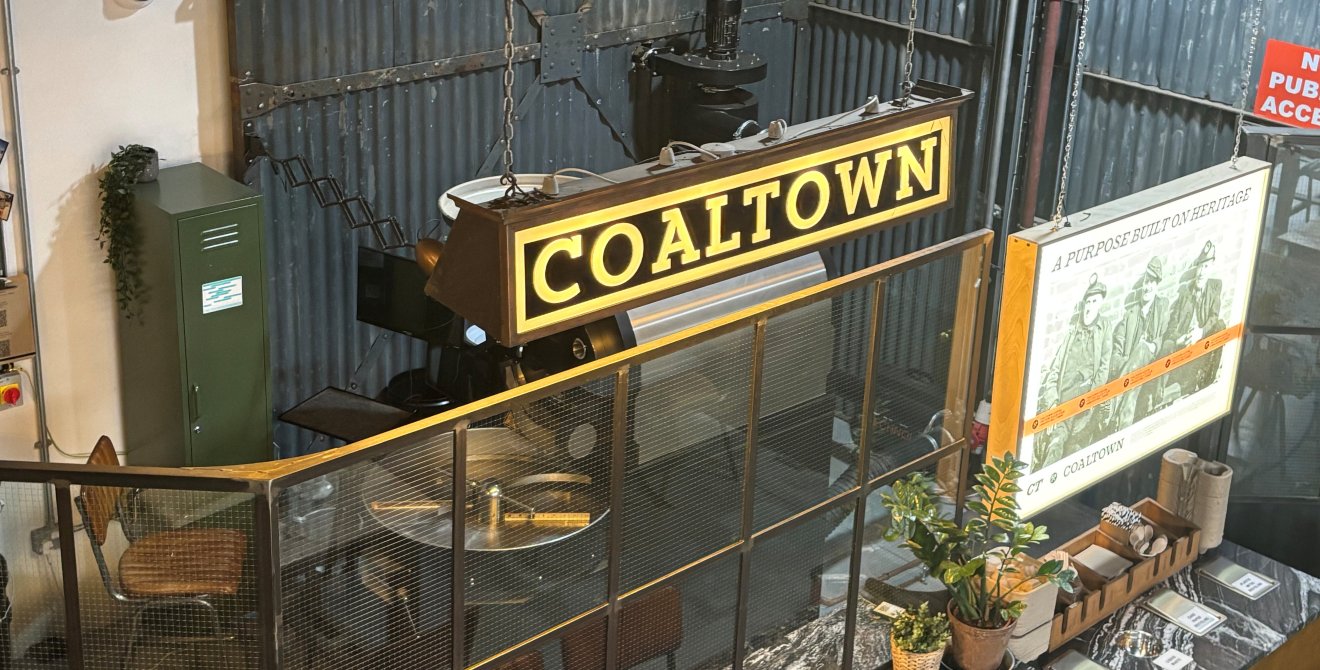
Recently, members of the Sport Wales Sustainability Business Plan group went on the road to Ammanford to meet two of our suppliers and to find out more about the sustainability and social responsibility actions of our suppliers.
Emma Wilkins, Chair of the group, shared some details of the trip:
We visited Coaltown, the company that will be supplying us with coffee very soon, and met with the founder (Scott), who explained that the business had been established with family and local connections at its heart.
Scott’s grandfather had been a coal miner in the area, and Scott’s passion was to use the power of the new ‘Black Gold’ (Coffee) to bring people to the area, support local employment and support coffee growers in an ethical way.
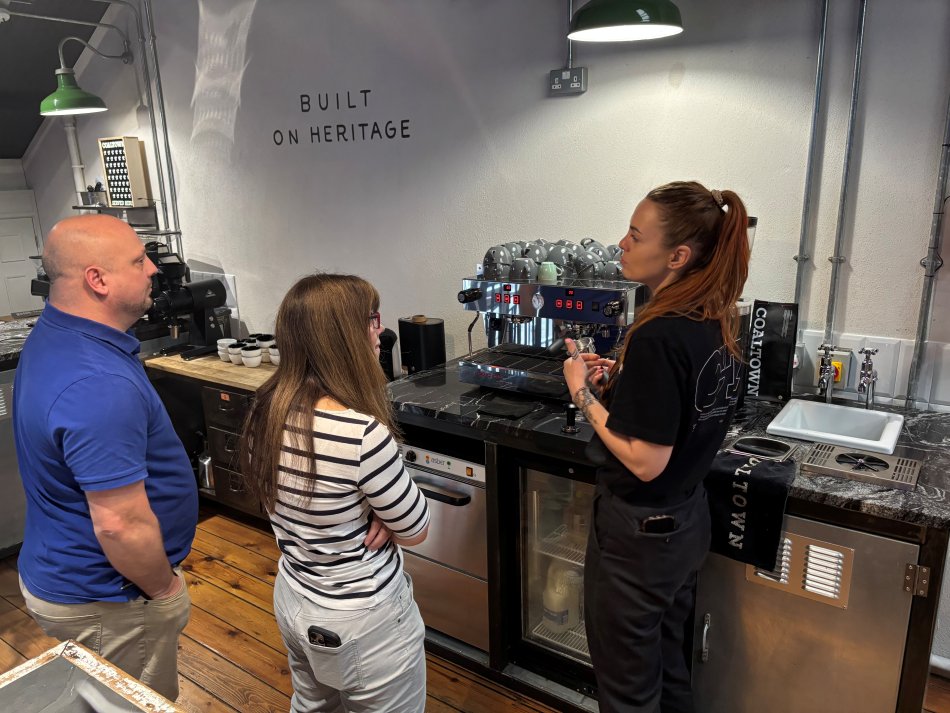
In addition to learning barista skills, the team heard how Coaltown had focused on packaging and producing larger quantities of coffee in recyclable bags. Coaltown is a certified B Corporation, meaning that it achieves high standards of social and environmental performance, transparency and accountability. They are also a Real Living Wage employer and invest in coffee producers across the globe, ensuring fair pay.
It’s important to us that our food and drink suppliers are sustainable. It means that we can use our purchasing influence to encourage fair work and responsible practices across our supply chain, and it also helps us reduce our carbon footprint through the use of recyclable materials and purchasing from local businesses. We also took the opportunity to meet with Steff Evans from Castell Howell, who provides a wide range of our food, such as meat, vegetables and fruit at the Sport Wales National Centre and is leading the way on sustainability actions within the Welsh food sector.
The team from Castell Howell outlined how they are working with schools to encourage children to eat more Welsh-grown vegetables. They are working with school catering teams and running events with parents to make healthy food exciting. From a Sport Wales perspective, we’re keen to work with suppliers who promote healthy eating. This supports our sustainability aims by building healthier communities, supporting Welsh-grown produce and shortening supply chains. It also helps reduce the environmental impact of food through more local and seasonal choices.
Next steps?
- Coaltown coffee will be coming soon…
- Continue to work with Castell Howell on sustainability improvements, including how to more accurately report on our carbon emissions linked to the goods and services that we buy. The current process estimates the footprint based on the sector that our suppliers work in and how much we spend. We’re looking to work with suppliers to calculate this on an actual basis to more accurately report our emissions, which is reported to the Welsh Government.
- We will shortly be installing a new vending machine in the Hwb Café from Change Please, an award-winning social enterprise that uses all profits to support people experiencing homelessness. They also provide barista training to people to support them with everything they need to turn their lives around, such as a living wage job, accommodation advice, therapy, a bank account, and onward employment opportunities.